
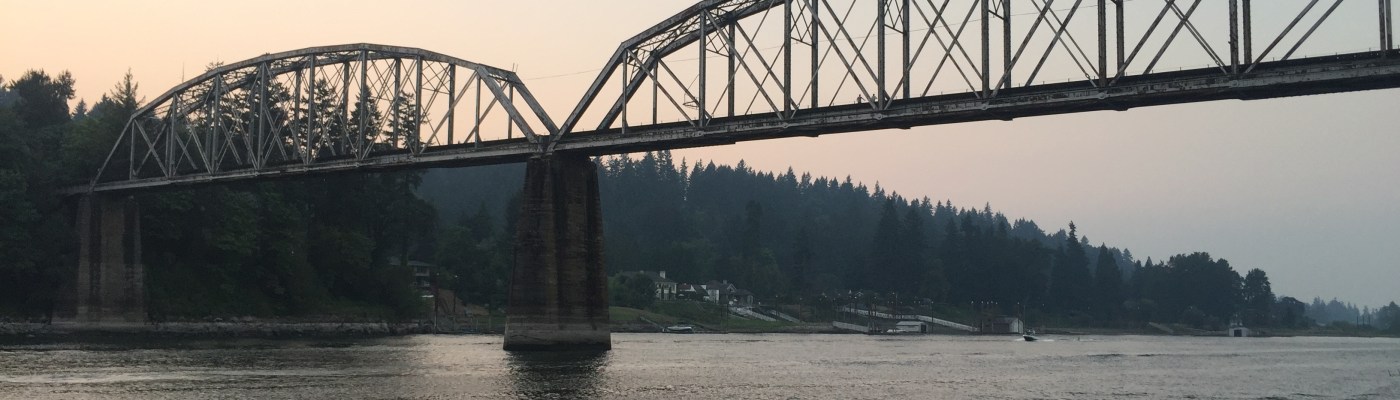
Note, I did most of my research for this way back in 2018. I pored through old newspaper clippings, interviewed folks, toured spots, did research, etc. then promptly forgot about it all until I re-found a folder on my drive (erroneously labeled of course.) I usually write about architecture, building history and the built environment and less about people so this is a bit “off brand” if you will.
William L. Finley, one of the founders of the Oregon Audubon Society (now the Bird Alliance of Oregon) and one of Oregon’s earliest conservationists, lived down the road from me. Well, he did, long before I was born and long before I moved to the area. (Spoiler alert: he died in 1953.)
Years ago, The Clackamas Review ran a feature about a photographer who had won a wildlife photo competition. Buried in the story was an interesting detail: the photographer lived on Finley’s old homestead.
Finley was one of Oregon’s earliest conservationists: a wildlife photographer, activist, writer, lecturer, and eventually the state’s game warden.
In the late 1800s he and his friend Herman Bohlman were part of a group of amateur naturalists who collected bird eggs and skins. Specimens could be sold or traded, and the practice was widely accepted. Around that same time Bohlman purchased a camera.
“Wildlife photography” barely existed as a field back then. The equipment, wooden cameras and glass plate negative, was bulky and fragile. While Bohlman was often the technical and artistic one behind the photographs Finley became the writer and public advocate for their work.
The work was grueling to get the perfect shot. They hauled heavy cameras into remote places, climbing cliffs and trees to photograph birds in their nests. Some shots required climbing more than a hundred feet with glass plates strapped to their backs.
As the years passed, Bohlman gradually stepped away from the photo expeditions but another collaborator soon stepped forward: Irene Finley, William’s wife.
She traveled with him, helped in the field, and contributed writing to their publications. In some of the photographs you can see her climbing rugged terrain carrying boxes of glass negatives, all in heels and a skirt. Finley may have been the public face of the work, but it was rarely a solo effort – a familiar story across history. (What’s the saying? Behind every successful man is a strong woman?)
Living along the river
The Finleys eventually settled in Jennings Lodge along the Willamette River, just south of Portland in the early 1920s. The location offered the best of both worlds: rural enough for wildlife photography but close enough to Portland to reach by trolley. Today, Jennings Lodge and next-door Oak Grove (both in unincorporated Clackamas County) still have some of the same vibe – large lots, deer roaming, open spaces, birds and various critters. The trolley is long gone, and now the Trolley Trail connects the two communities to each other, to Gladstone to the south and eventually Portland to the north. (On another note, the area is also populated by many watersheds.)
At the time, though, their homestead became something of a naturalist’s playground, and occasionally a small zoo.
In the October 2, 1927 issue of The Sunday Oregonian, the article, delightfully written and very modern in its style, offered readers a glimpse of the family’s life along the river. In a short feature titled “Antelope and Goat Thrive at Finley’s,” the paper reported that Finley was raising a young antelope and mountain goat together at his Jennings Lodge property. The antelopes were named Anty and Bucky, while the mountain goat was named Nannete, respectively.
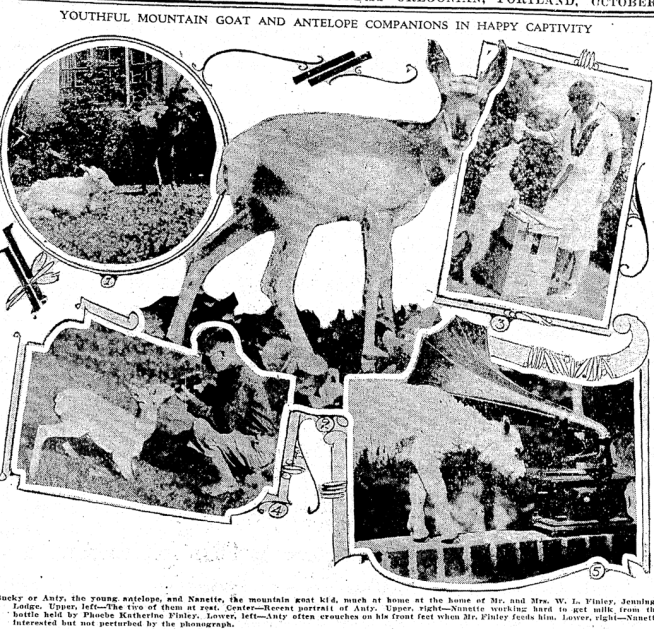
The three, photographed wandering the grounds, had become unlikely companions despite their different native habitats. This line really stuck out:
Mr. Finley, the distinguished naturalist, doesn’t mind the way Anty follows him around the place, leaping down to the river, leaping back to the garden and out to the chicken coop.
Over the years the Finleys also kept an assortment of animals including bear cubs, cougar kittens, and a pet condor (?!), living on the property until 1947.
Back in 2018, I got the chance to visit Finley’s home. The current owner (at least in 2018), and the winner of the above mentioned photo competition, Steve Berliner, is a renowned nature photographer in his own right. He graciously showed me around Finley’s home and riverside property. It’s empty now and sits a bit off the home where Berliner’s home is. But, it pretty much looked the same as when Finley lived there.
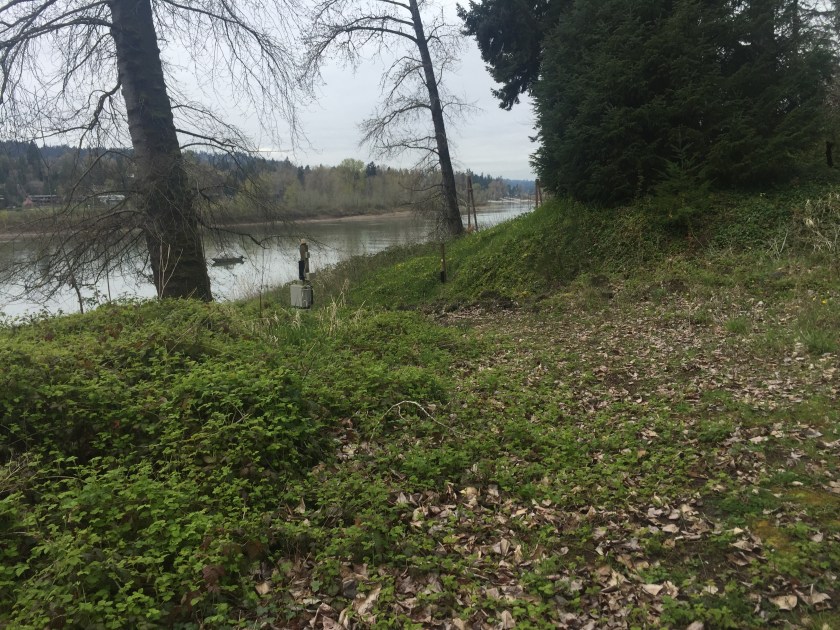
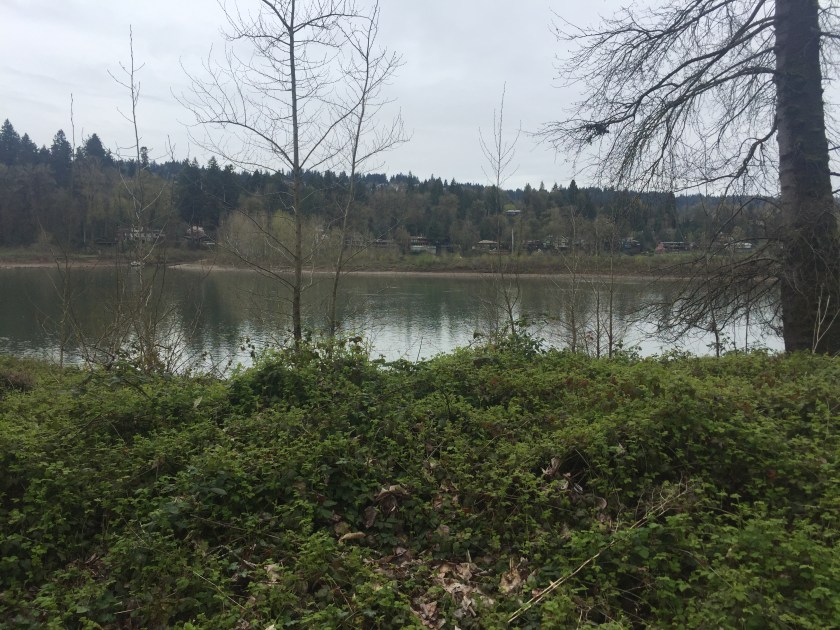
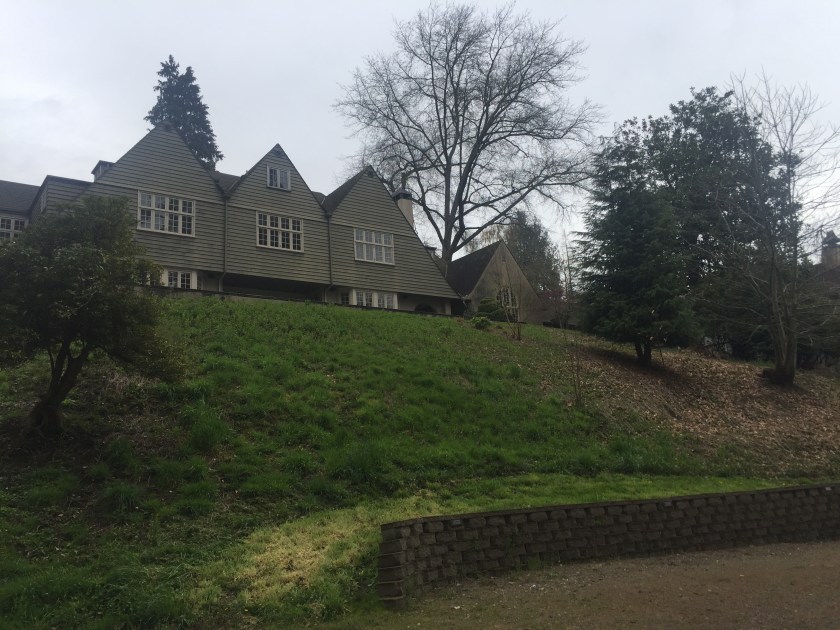
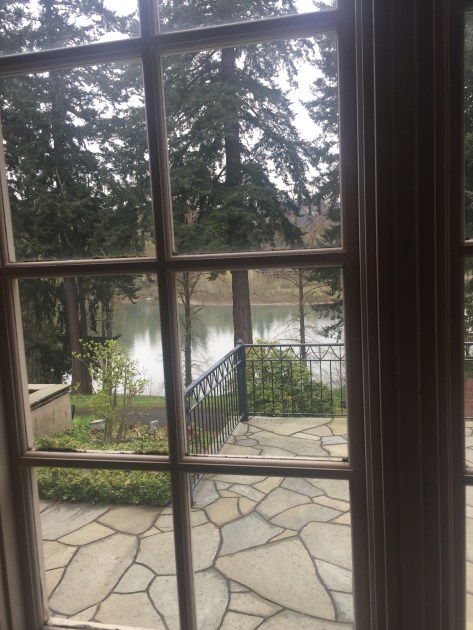
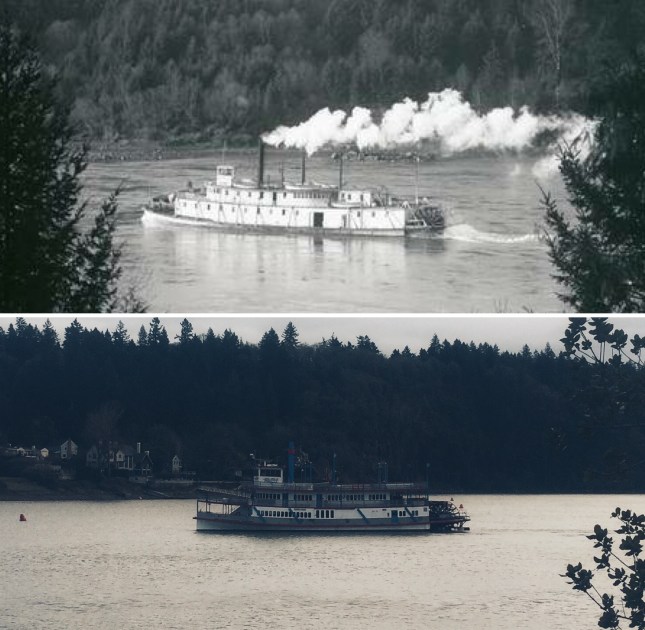
I like to think that living along the river shaped Finley’s view of Oregon’s environmental landscape as the Willamette itself became one of his many causes. In letters and articles he warned about pollution flowing into the river and the long-term damage industrial development could cause. Reading these warnings today, it is hard not to get a sense of déjà vu.
Here’s an excerpt from the book, Wild Animal Pets, he and Irene wrote, that gives us a glimpse of what living at their home was like:
We were standing on the hill at the side of our house overlooking the Willamette River. The round October moon was a sure sign that animals were on the hunt and growing fat and furry for the winter. The long fir branches swayed, and there was a stir among the maple leaves. I turned my nostrils to the wind. The message came in an unmistakable odor. It was not unpleasant. It never is in the open field or here on the slope above the river.
Last week my neighbor passed by and told me we had better block up the hole under our chicken-yard fence. He too had read the signs in the wind and was sure a skunk was in the neighborhood. He is of farmer stock.
He says he loves nature. Occasionally, when I go over, I have noticed he takes great pride in his pigs, especially if the market report records a rise in pork. He says no song thrills him like the cackle of his hens when eggs are sixty cents a dozen. He is the kind that kills skunks.
I am a naturalist living among practical farmer folk. I gladly settle in cherries for the songs of the robins. However, I am not selling cherries for a living. I, of course, have time to hear the whistle of the mountain quail and the melody in a meadow-lark’s song. I keep a cow and chickens. I have a vegetable-garden. But a large part of our ten acres is uncultivated. We have tried to keep some of the wild flavor in this tame patch of woods about our farm.
Finley’s long legacy
For Finley, the Willamette clearly wasn’t some sort of abstract idea or faraway place, it was in his backyard.
After living at the homestead, Finley soon joined a loose coalition of health experts, engineers, and sportsmen pushing Portland officials and industries to stop treating the river like a dump for chemicals and other nasty industrial waste. He wrote letters, gathered data, and worked directly with state officials to document the damage. That pressure eventually added up. In 1938, Oregon voted yes for the Oregon State Sanitary Authority, a regulatory body aimed at cleaning the river up.
Finley didn’t live to see the Willamette fully restored, and honestly, it’s still a work in progress.
Of course, the Willamette’s story didn’t start or end with Finley. Long before settlers arrived, the river in the Portland metro was the lifeblood of the Kalapuya and other Indigenous peoples for thousands of years. Later, Portland’s Black and Chinese communities also fished and lived along the river. When pollution worsened in the early twentieth century, those communities often bore the brunt of the damage.
And, what we now think of as Oregon’s and Portland’s environmental identity, its wildlife refuges, its activism, and that, of course, landscapes and rivers should be protected, did not appear on their own. It was started by guys like Finley.
William Finley died in 1953. Of course, the Willamette still runs past his old place on the hill. But the arguments and pleas he was making about the river, its wildlife, and the pollution haven’t really gone away.
We do have current river champions for sure. Organizations like the Human Access Project, the folks behind the Big Float, are working to reconnect Portlanders with the Willamette and expand public access to the river.
The Willamette Riverkeeper focuses on protecting and restoring the river’s water quality and habitat.
Nesika Wilamut, an Indigenous-led organization, “unites people and communities dedicated to the well-being of humans and the environment in the Willamette River Basin.”
And, the Braided River Campaign’s goal is to “work to make the lower Willamette River waterfront a safe and healthy place. We believe in community participation in city government decision making.” Follow them on Instagram.
Sources/Learn more
*Interview with Oregon Historical Society’s Laura Cray NINE (!!) years ago (thanks Laura!) and the amazing Reuniting Finley and Bohlman collection
* Oregon Encyclopedia
* OSU Special Collections
*Oregonian and Oregon Journal archives
* Speaking for the River – This book goes deep into the history (both natural and political) of the Willamette in Portland and the legacy of its mistreatment. Recommended.
Fun facts
*Though this piece focuses mostly on Finley’s activism with the Willamette, he was also a key figure in Oregon’s battle against the plume trade (the practice of decorating women’s hats with feathers and entire bird skins that was decimating bird populations). When milliners and socialites pushed back against bans, Finley and his allies escalated, confiscating feathered hats directly from stores and even from theatergoers on their way in.
*Nearly 70 percent of Oregonians live within 20 miles of the Willamette River, and some may not even realize it. Although the river passes through nine counties and 19 cities, miles of its channels and backwaters cannot be seen from roads or towns. With many communities no longer economically dependent on it, the Willamette can be overlooked – so familiar a part of our landscape that it fades into the background.—Willamette River Recreation Guide, 2007
*The Finleys had a pet quail—Don Q. Quail— that they would take around to schools. They even took it on a train trip to New Jersey at one point. It went everywhere with them.
Discover more from Lost Oregon
Subscribe to get the latest posts sent to your email.


Another great article about the interesting people and the history in our immediate vicinity. Thanks