
Introducing Oregon Makers, occasional posts about creators, makers + artists across Oregon who not only create but contribute to the built environment of Oregon’s cities in creative and impactful ways.
First up is Nigel Barnes, owner of Electric Spaghetti Neon, his company that offers design and custom fabrication services for neon and hand-painted signage. He also offers detailed restoration and repair of vintage and antique items, specializing in illuminated signage. Chances are you’ve seen his work around town.
We had a great chat about the history of neon, learning the ropes, Portland history, and some of Nigel’s favorite buildings and signage in Portland. Here’s the edited interview.
How did you get started in neon and neon design? How does anyone really get started in neon design these days?
I got into neon through architectural history. I worked for Rejuvenation and ran their Salvage department, which eventually morphed into their Antiques and Vintage department. I was really just thrown in the deep end—or jumped in the deep end—of the pool of architectural salvage and Portland architectural history.
When the housing market crashed in 2008, the market in Portland changed dramatically. Before that, people were buying old houses and there was a vibrant culture around restoration and preservation and the salvage architecture market was really thriving. And then all of a sudden, overnight, it just completely died.
I had to figure out how we were going to maintain business when no one wanted architectural salvage. And that’s when I started branching out and bringing in different kinds of stuff, like furniture, decor items, weird oddities, and advertising signage. What I discovered was that neon frequently needed restoration. I’d done sign painting before and had an appreciation of letter forms. So, when I left Rejuvenation in 2019, I didn’t know what I was going to do next. The neon guy who we collaborated with to restore vintage signs was on the verge of retirement, and he offered to take me on as an apprentice and teach me the craft. That’s it these days, there really aren’t any neon schools anymore. Not that most neon schools in the past were any great shakes, but at least they existed.
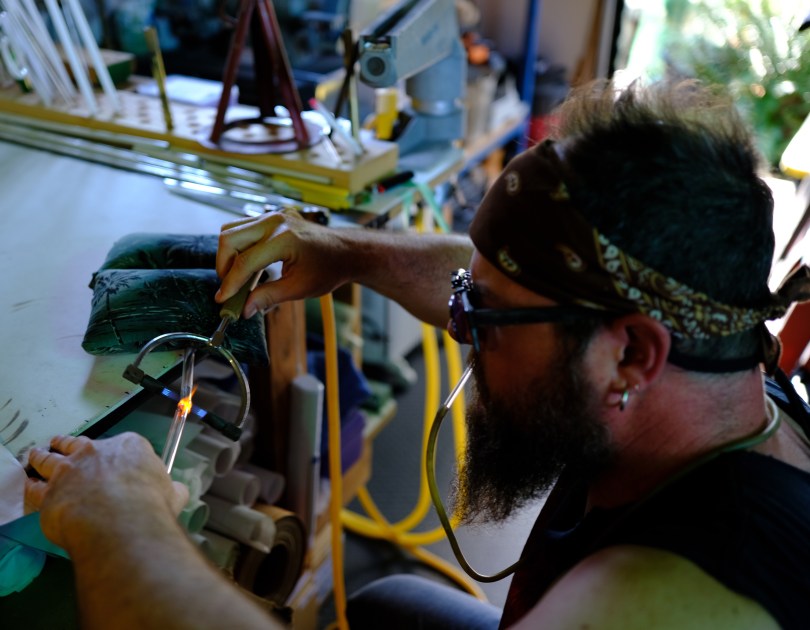
Then came the pandemic, which ironically helped me because neon takes a long time to learn, like the bending of glass, and my mentor provided me with free access to the studio. I would go there and then ruin glass for two years, basically, until I could finally start to do it. In the spring of 2021, I built my own workshop. I’d just sunk all this time and energy into learning this craft, and I really wanted to try to make it work.
I do everything by hand. I use a computer to create sketches, but really everything even there is hand drawn, nothing is rendered out. All my patterns are done with pencil and pen and paper. That’s my thing. That’s my aesthetic. That’s what makes these old signs beautiful and valuable to me.
What role does neon play in architecture or a city? Is Portland any different than others?
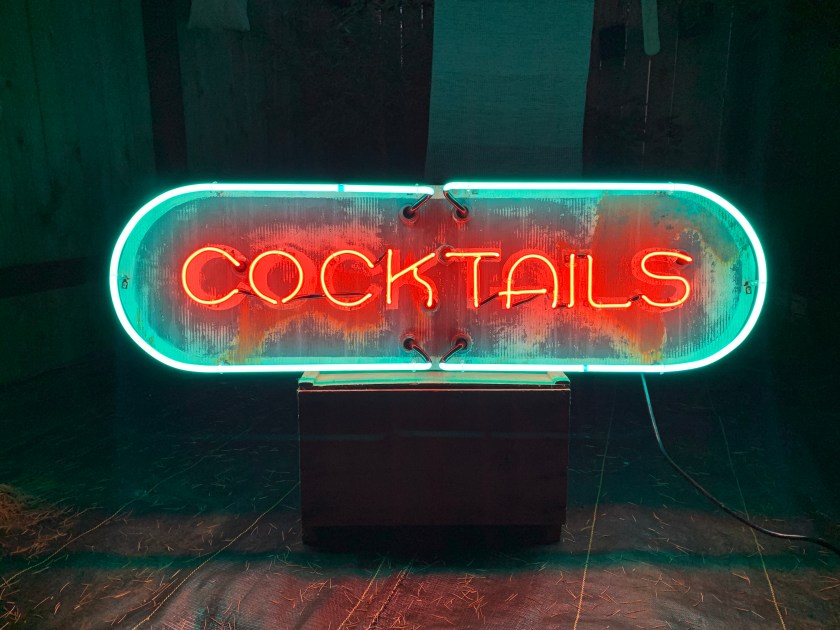
Neon signs really become a building’s cultural landmark. They’re inherent to the fabric of the city and the aesthetic of it. People really forget that or take it for granted. Everyone knows the Made in Oregon sign on Burnside. It used to be the White Stag sign and now it’s just the Portland, Oregon sign, so at least it’s been preserved and evolved, but it’s really still basically in a lot of ways the same.
On the other hand – and more recently – the Burlingame Fred Meyer sign was the last neon Fred Meyer sign of its kind anywhere. They just unceremoniously took it down and replaced it with an LED replica. People think LEDs are the same as neon, or it’s better somehow, but it’s factually not better. It’s better suited for some functions, but not to replace neon.
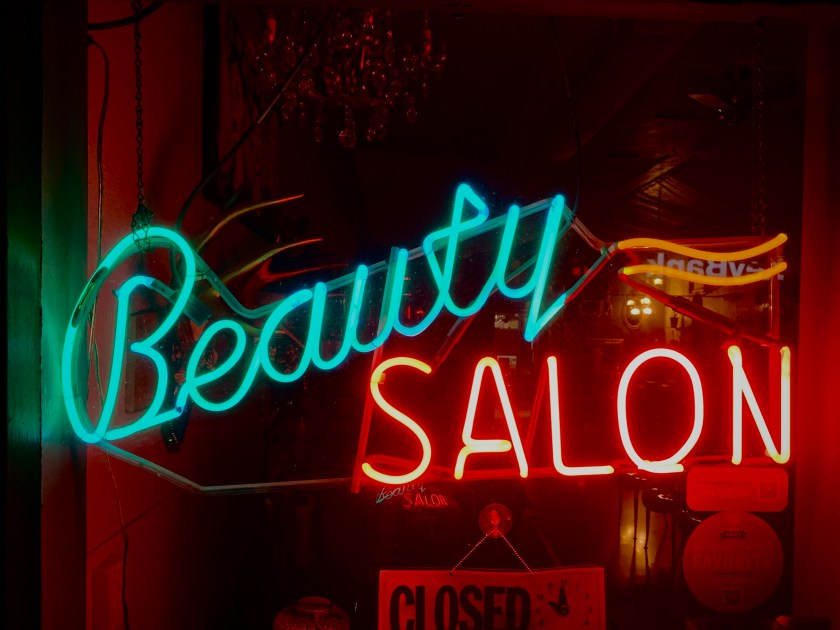
There are some big neon signs left in Portland like the Chin’s Kitchen sign in the Hollywood district; that sign is just phenomenal. My own favorite big signs are the Laurelhurst Theater marquee – it’s incredible – and the Aladdin theater marquee. But, being a neon nerd, I love the little, tiny signs too. There’s one on Woodstock Blvd., a mom-and-pop beauty shop, super old, not fancy or trendy. And they have this old window hanger sign that’s kind of crusty and faded, and it’s just gorgeous to me. The skill that’s required to make signs like that— it’s like anything else, the more you learn about it, the more impressed you can be with something that looks relatively simple but can actually be extremely difficult to execute.
Every single neon sign you’ve ever seen in your life, from a theater marquee to every “open” sign in every window of every business in the country, every single one of them was made by hand. There’s no other way to do it. There’s no templates, there’s no machines. They’re all made with torches and glass tubing. And they’ve been made the same way since 1920.
Let’s talk about your sign work with for the Sandy Jug and Holman’s and your partnership with Marcus Archambeault and Warren Boothby
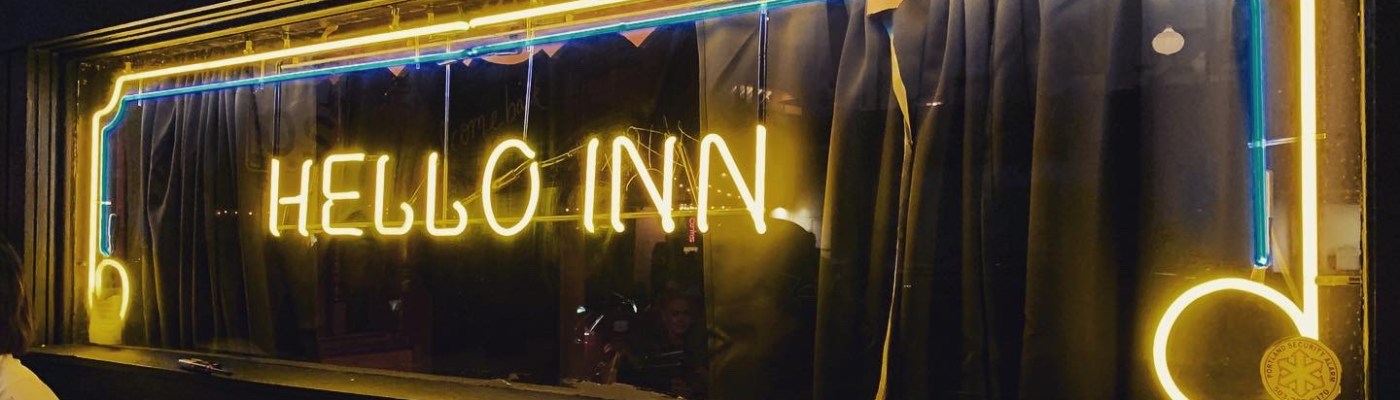
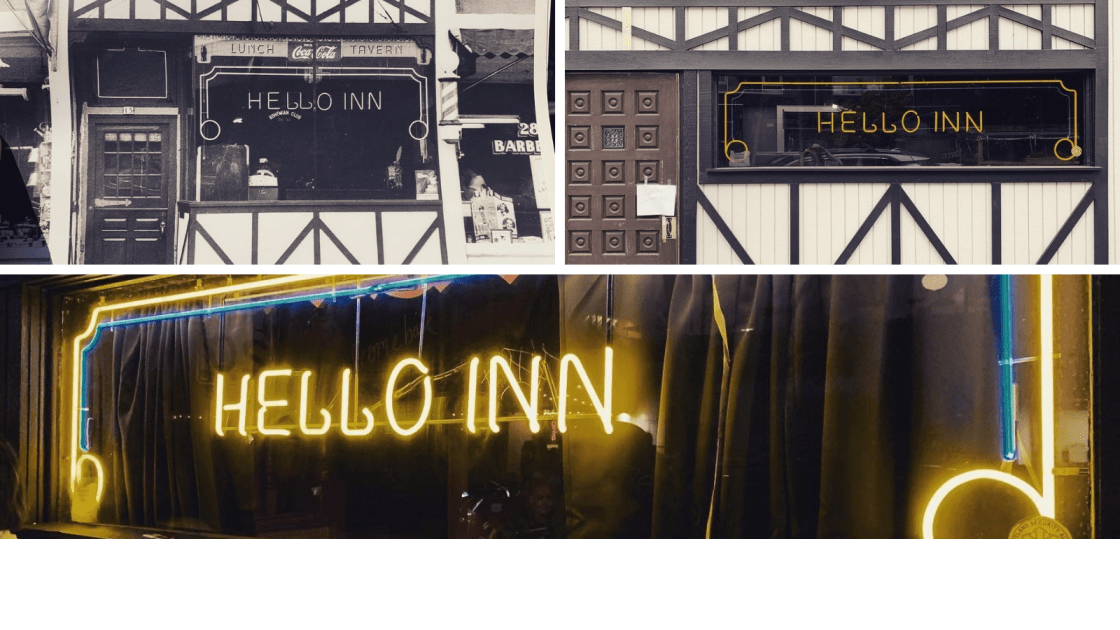
I first met Marcus when we worked together at a hardware store on Woodstock Blvd. Years later, I read about these bars being retrofitted and then realized that he was one of the guys doing it. I reconnected with him and discovered he was passionate about Portland bar history. He and Warren have got this dream list of places to keep going and restore and make a vibrant neighborhood. When we reconnected, it was right as they acquired Holman’s. Because Marcus is so into this history, he always immediately starts looking up the original architectural plans. He does this deep dive on historical photographs to see if he can find old pictures of what the interiors looked like and discovered that Holman’s in the 1930s was called the Hello Inn. One photo also had the original neon window sign hanging in the front window that said Hello Inn and he wanted to recreate this. That was an amazing opportunity, because here I had this great clear photograph of the sign from the 1930s to base my pattern off of, and we picked tubing colors that would’ve been available in the 1930s. That was a really awesome first project to work on with him.
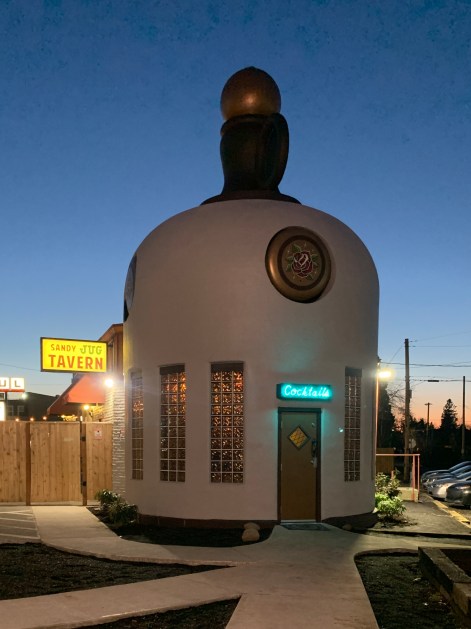
And the Sandy Jug is of course, an amazing, iconic, Portland building. I’m pretty sure it’s one of the last programmatic architectural buildings in the city. It was on Marcus’ dream list of places to acquire and rescue because it’s had this very slow, long decline into being like, truly seedy, and approaching death, and it almost got demolished multiple times. And then suddenly, somehow they were able to get it and save it.
Who would build a building like that now? It would probably be impossible, first of all, just because of codes. But it’s just so strange and whimsical, and I love that aspect of it. And to be part of a project like it is a real dream. That’s the stuff that I love and really care about.
The next-gen of neon makers — is there one?
Yes, I believe there is! I got into neon because I love old neon and I came into it through the restoration of vintage signs. And that’s what I’m most passionate about; If I could only do one thing, it’d be to help preserve and restore vintage signs. Neon will evolve, but I think there will always be a demand for these skills, as neon continues to age, and these iconic signs gain recognition as objects worthy of preservation.
I would also love to have an apprentice one day and pass on this knowledge. I’m really passionate about that kind of thing, sharing knowledge for future generations. I’m always happy to share any knowledge I have with anyone, because you learn this stuff very slowly, one thing at a time, over the years. There’s no magic book or video you can watch that’s going to teach you the trade.
Need a neon sign made? Repaired? Nigel is your guy. For more information about his company, visit Electric Spaghetti Neon or email him here. Nerd out on his work on Instagram.
Other sources
Virtual map of Portland area neon signs.
There’s a paper map, too!
An Oregonian article from 2010 on some of Portland’s iconic neon signs.
And of course, the National Neon Sign Museum in The Dalles.
All photos courtesy of Nigel.
Discover more from Lost Oregon
Subscribe to get the latest posts sent to your email.
 Lost Oregon

Thank you for your determination, passion and skill to preserve and restore the Neon signage in Portland.