

More than a decade ago I wrote for Neighborhood Notes, a cool community-focused digital publication based in Portland. The now-defunct site went offline a couple of years ago but the editors have graciously let me repost a couple of the posts I wrote. Here’s one that featured SE 13th in Sellwood from 13 years ago. A lot has changed. RIP Tilde.
Usually described as a “small town within Portland,” Sellwood boasts one of the first—albeit very small—New Seasons, cool restaurants, an ever-changing pod of food carts, boutiques, bars, pubs, waterfront park, an amusement park frozen in time, as well as myriad wonderful housing styles in tree-lined, snug streets. It’s not edgy, it’s only a bit hip with a tad older population than, say, Alberta, but it still holds its own in the eat-drink-shop-walk department. And it’s an area that’s rapidly changing.
Its own city until 1893 before it was annexed into Portland, Sellwood once had its own race track (City View Racetrack, now Sellwood Park), a streetcar that served between downtown Portland and Oregon City and a ferry that traveled the Willamette. Many of the original buildings that dotted the street in historical photos still stand, giving the area that extra bit of charm.
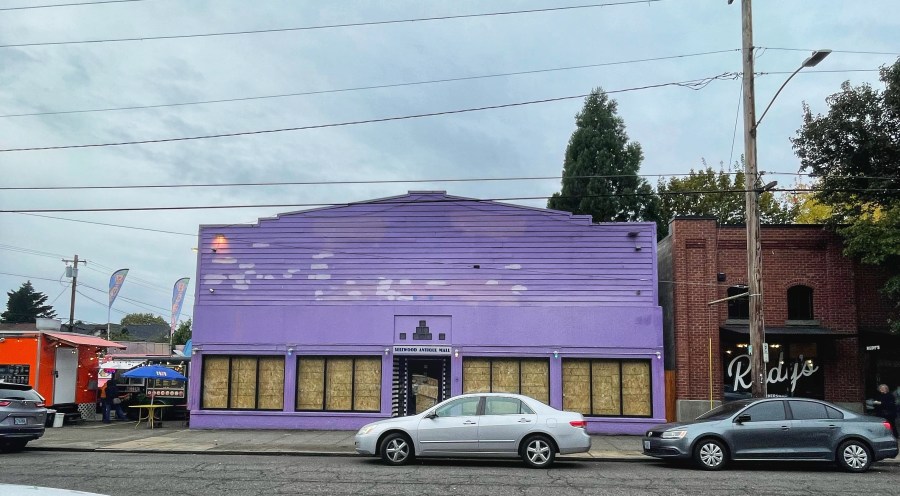
Nowhere is that more evident than Southeast 13th Avenue, from busy Tacoma to Bidwell where new shops, restaurants and businesses are cropping up at a rate so fast that it’s hard to keep up. What started out in the ’70s as Portland’s Antique Row—still a huge attraction for Portlanders—has now diversified.
But even just a couple of decades ago the neighborhood was a different place.
Southeast 13th Avenue Reinvents Itself
Like many neighborhoods across the country with old housing stock, during the past 15 years or so the community saw an influx of younger families moving back in from the outer suburbs and other parts of the country, renovating old homes and looking for places to shop and eat. The last 10—even five years—has seen tremendous change to Sellwood’s retail landscape.
“The area was once very heavily dominated by antique shops. If you wanted to go ‘antiquing’ it was the place to go back in the ’80s and early ’90s,” says Matt Schweitzer, North Rim Partners, a commercial real estate firm that has worked in the Sellwood area. “After that timeframe it took a while for Sellwood to reinvent itself because it had to. You had stores leaving and local businesses trying to figure out what to do. Over the last 10 years you’re seeing the fruits of those labors,” he says.
Like a reverse-domino effect, the area first saw a switchover to nice restaurants, then the addition of the library and eventual infill businesses and new projects being constructed.
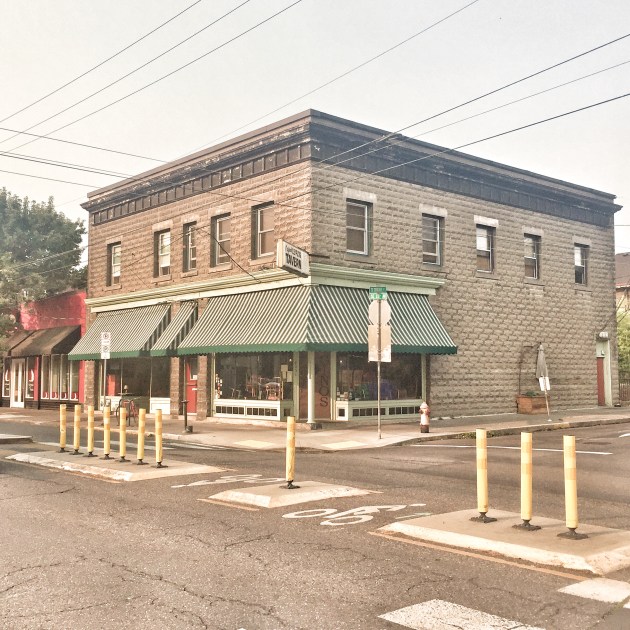
The cornerstone of the street could be the Sellwood Bank Building. Built in 1912 on the corner of Southeast 13th and Tacoma, a “First and Main” location as Schweitzer calls it, North Rim recently purchased it and has been renovating the structure, owned by the previous owners for more than 30 years.
“Our development company always loves the opportunity to take an existing building and breathe some life into it. It gave us an opportunity to get an older building that needed some upkeep but had a wonderful history,” he says. Though most of the retail space is leased, the corner spot is still open and ready for a tenant. “We’ve had a couple of people come through, one offer that cooled down, but no one yet. It’s a space that hasn’t been on the market for over 50 years and it’s a high visibility spot.”
One person who can testify to its visibility is one of the original owners, Carol Halverson. She and her husband Cliff, who owned the building since 1978, sold it and passed it on to the next generation that could care for it.
Like many buildings in Portland, there’s nothing overly spectacular about it. It could be called handsome, with an unspoken elegance and even charming. And it’s almost a miracle it’s still standing.
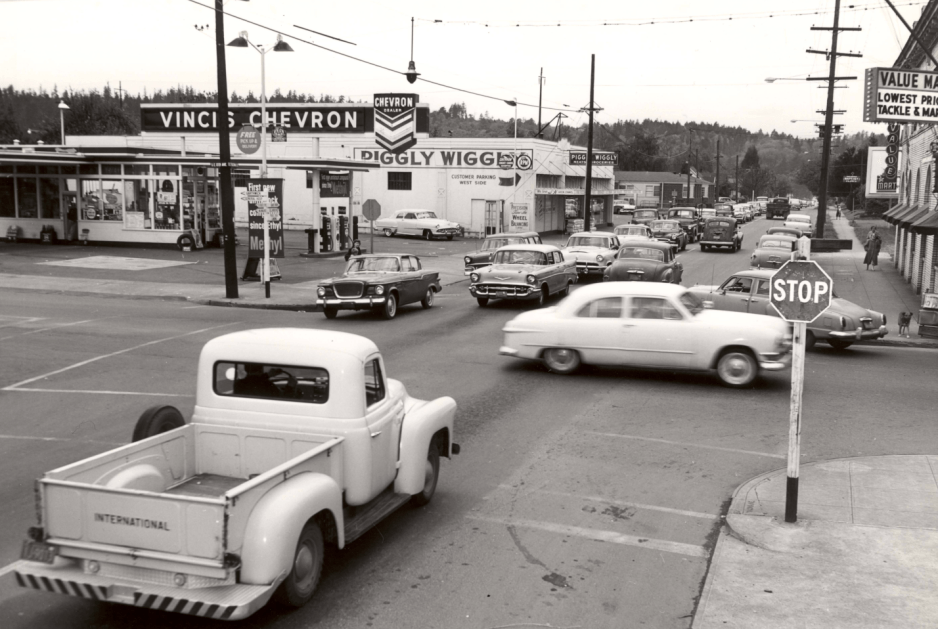
When the Halversons bought the space in the late ’70s there was talk of tearing it down and adding a gas station on the corner, like many corner spots across city streets in Portland, similar to the corner across the street from the building.
“Those were the days when fillings stations were on every corner. They had one on the other corner and when it was torn down [ironically where the recently shuttered Blockbuster stood] it was such an ugly area due to the decontamination equipment. It took forever to complete.”
Across from the Halverson’s property where the Starbucks is stood an unsightly Pizza Hut. Around the corner one could check out a matinee at the Sellwood Theater (now Columbia Sportswear). Where New Seasons Market sits used to be a grocery store with a Laundromat attached to it that went by numerous names. Or you could hang out at the Leipzig Tavern (now Gino’s Restaurant and Bar but the Leipzig sign is still there) “where fishermen would come and brag on who caught the biggest fish,” says Halverson.
But the street definitely had a seedy side like many neighborhoods in the 1970s. Drugs were rampant, crime brought bars on windows and graffiti and littering were commonplace. “In the early days it was a pigpen. In those days you could literally fill a coffee can with cigarette butts from the four corners. Today, there’s no cigarette butts and no debris and people are doing such a better job of taking care if the street. Back then, no one seemed to care,” says Halverson.
Sellwood Rediscovered, Becoming a Destination
Many of the newer businesses that have set up shop during the past decade might echo Halverson’s thoughts. Cindy Wallace, co-owner of the successful Blue Kangaroo Coffee Roasters, says Sellwood is becoming more of a destination.
The roasting company, celebrating its two-year anniversary, not only caters to locals but roasts coffee for retail shops around Portland as well as other coffee shops. Wallace says she and co-owner Flo Posadas chose Sellwood’s Southeast 13th Avenue because an opportunity arose but they also liked the feeling of the neighborhood and visited it often.
It also seems like many others throughout Portland are discovering Sellwood and visiting. “We can attest to that by people coming from all over the city because they like the community feeling,” says Wallace. “We’ve seen the young and the old, new and established are getting along really well.”
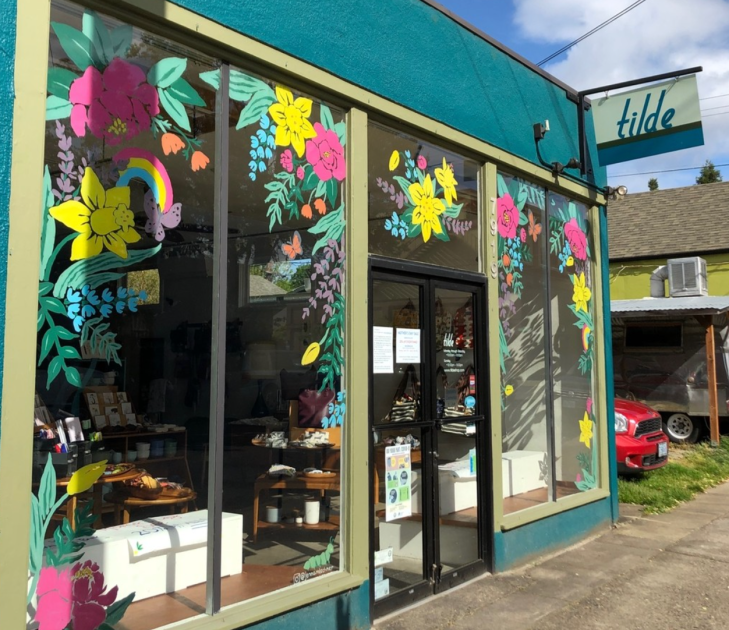
In the heart of Southeast 13th is Tilde, what owner Debbe Hamada describes as a modern accessory store. Hamada says one of the unique traits of Sellwood is that, though it’s part of Portland, it still feels like a separate city which draws merchants such as Hamada to it. “In the four years I’ve been here it’s changed a lot. It seems like we keep getting new, young families with children moving in that are supportive of local businesses,” she says.
Like her neighbors, the small town charm, history, walkable streets, and local vibe attracted her. “I liked that it was a neighborhood unto itself. I was looking to move into an older building for retail but also within a community that supported its businesses and it was obvious this one did.”
Pedestrian Friendliness, Smart Growth Key to Viability
If one were to hand-pick what kinds of shops, business and amenities they’d want in an ideal neighborhood, Southeast 13th Avenue is a prime example. Urban planners and pundits have always said that the key to a viable neighborhood is a strong community but also easy access to shops and amenities by walking and biking. The neighborhood has this, in spades.
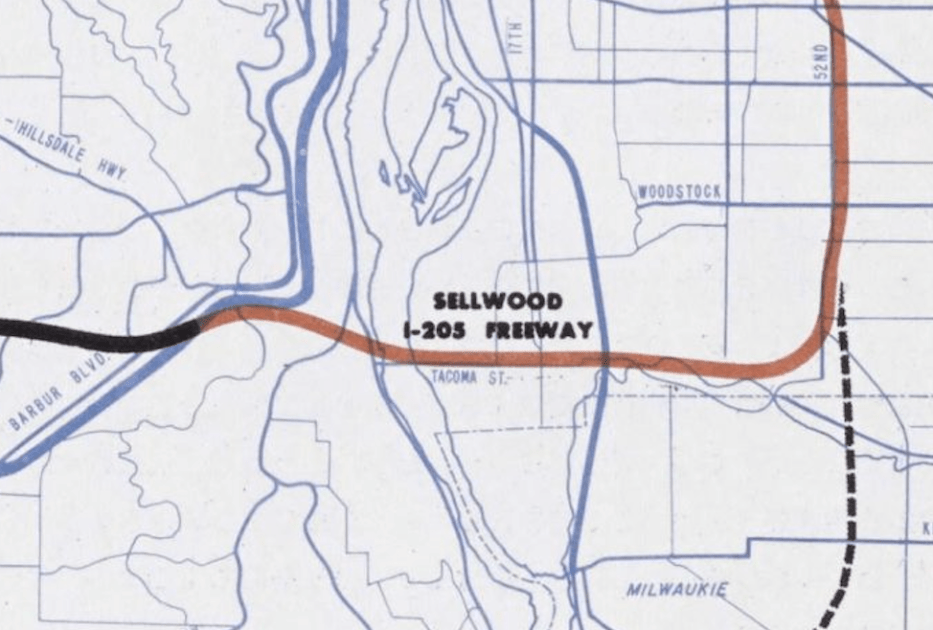
The neighborhood would have been a completely different place had the proposed Mt. Hood Freeway system had been built—there was a Sellwood Freeway in the mix. Instead, the recently built “bike boulevard” on Spokane conveniently cuts across Southeast 13th, giving pedestrians and bicyclists easy access to both sides of the street as well as connecting the area to the Springwater Trail. It also makes for a nice stroll and a chance to stop into shops and ultimately support local merchants. There are other reasons for the pedestrian friendliness and smart growth, though.
“Love or hate the urban growth boundary, without it much of these neighborhoods like Sellwood wouldn’t be thriving because it doesn’t allow people to just go build something new. The more walkable we can make our neighborhoods and the goods and services we can fit in the better off we are,” says Schweitzer. The keys to a thriving neighborhood he says are having a grocery store, coffee shop, and, surprisingly, a theater. “The obvious reason is that people come back to them multiple times; they’re not a one-time experience.”
Another possible factor to the transformation of the neighborhood was the lane change on Tacoma that helped mitigate speeding traffic. The city removed a lane of traffic to help slow the traffic down from commuters passing through Sellwood. “Cars would speed by and now they have center dividers with calmer traffic that slow people down so it wasn’t like another Ross Island bridge. As many people that go over that bridge every day you want them to slow down going through the community,” says Halverson.
Reverend John Sellwood founded Sellwood as a working community, and Halverson believes if he came back today he’d fit right in. “It’s not over the top and it’s still a community. I think if you took the whole metropolitan Portland area, Sellwood would be the heart,” Halverson says.
Discover more from Lost Oregon
Subscribe to get the latest posts sent to your email.
 Lost Oregon
Thank you sir Chilson for such a remarkably well written description—dare I say tribute!?—to an equally remarkable little speck on the planet!
I just stood on that island and took that picture this afternoon!